
Criminal Cases in Saline County Courts
Saline County Circuit Court is the felony trial court for the 22nd Judicial District. Its four divisions sit at 200 N. Main Street and 321 N. Main Street in Benton. The Circuit Clerk and Recorder maintains the criminal proceedings and dockets. That office is the right custodian for filed felony charges, motions, pleas, judgments, sentencing entries, certified copies, and older Saline County criminal case records that do not appear online.
Saline County District Court has countywide authority over misdemeanor criminal cases and preliminary felony matters, and it conducts no jury trials. Its Benton and Bryant departments may hold the first public court record before a felony moves to Circuit Court. The court listed on a docket therefore matters as much as the party name. A district entry is not proof that the whole felony case will remain there.
Saline County Criminal Court Divisions
Four Circuit Court divisions share Saline County criminal jurisdiction. First, Second, and Third Division are based at 200 N. Main Street. Fourth Division is at 321 N. Main Street. The division and judge shown in Search ARCourts help identify the correct courtroom and clerk file, but the Circuit Clerk remains the central keeper of the record.
The official Saline County Circuit Court directory shows each division's location and telephone line. The directory is useful when a future event is listed without enough practical detail to identify where to appear or which office can confirm the schedule.
The county's court directory illustrates how one criminal docket can be assigned within the four-division system.
How to Search Case Records
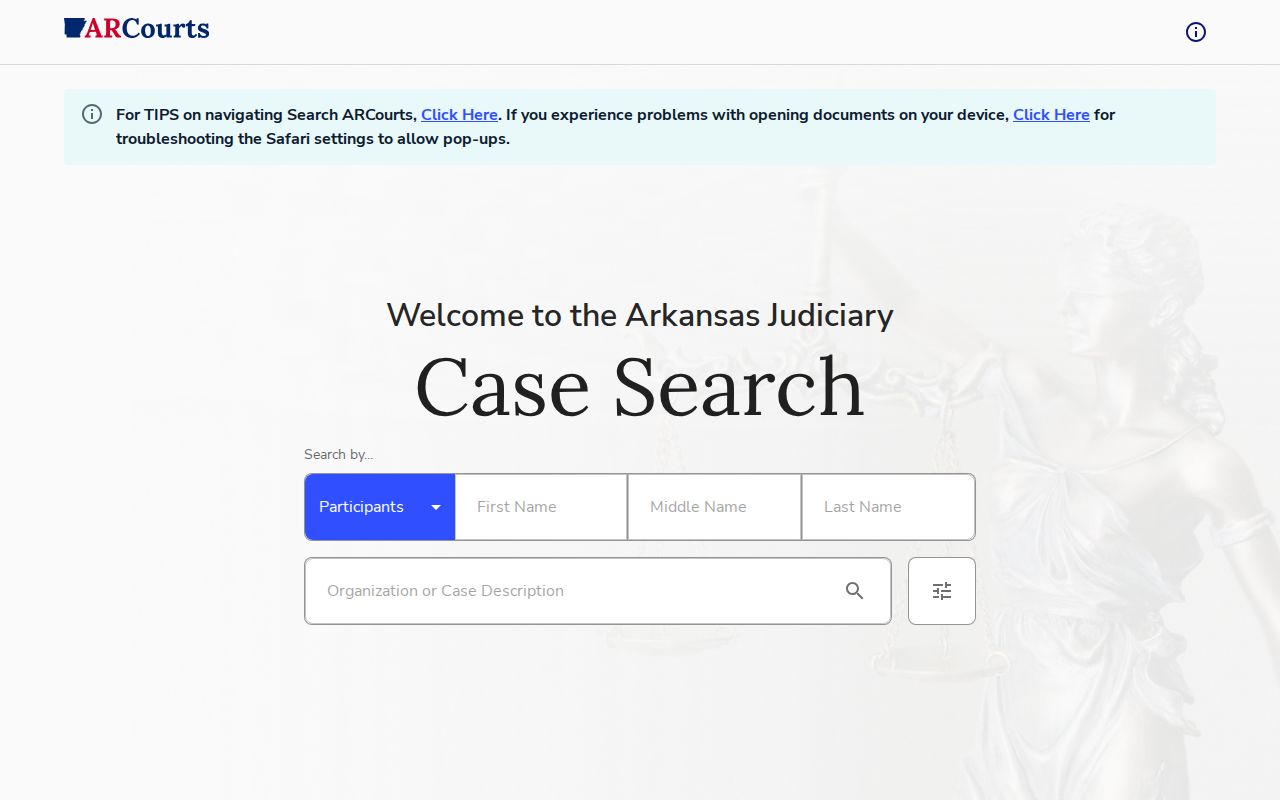
New Search ARCourts is the central public online channel for Saline County criminal court cases. It includes public information for courts using the Contexte case system. The Arkansas Judiciary describes enhanced filters, public case details, and some linked documents. Not every district record or document is online, so save the case number and contact the correct clerk when the result is incomplete.
- Open Search ARCourts and choose the public case search.
- Search by participant name or exact case number.
- Filter for Saline County and the appropriate court when those options appear.
- Open the docket and record its court, judge, charges, disposition, future events, and judgment status.
- Ask the Circuit Clerk or District Court department for missing filings, certified copies, or archived records.
| Field Label | Type | Required | Notes |
|---|---|---|---|
| Participant name | Text | No | Use spelling variants when needed. |
| Case number | Text | No | The most precise route to one docket. |
| County or court | Filter | No | Choose Saline and the likely court. |
| Case type | Filter | No | Narrow results to criminal matters. |
| Filing details | Result field | N/A | Use dates and case type to confirm a match. |
Saline County Court Search Change
Search ARCourts replaced Public CourtConnect. The change brought a streamlined search and added filtering, but it did not make every court file an Internet record. Circuit courts provide statistical case information, while additional Contexte details and documents depend on the court and the public status of each item.
The Arkansas Judiciary's Search ARCourts explanation describes the available party, judge, filing, charge, disposition, future-event, judgment, and document information. That official explanation is the best check when an older instruction still tells a reader to use CourtConnect.
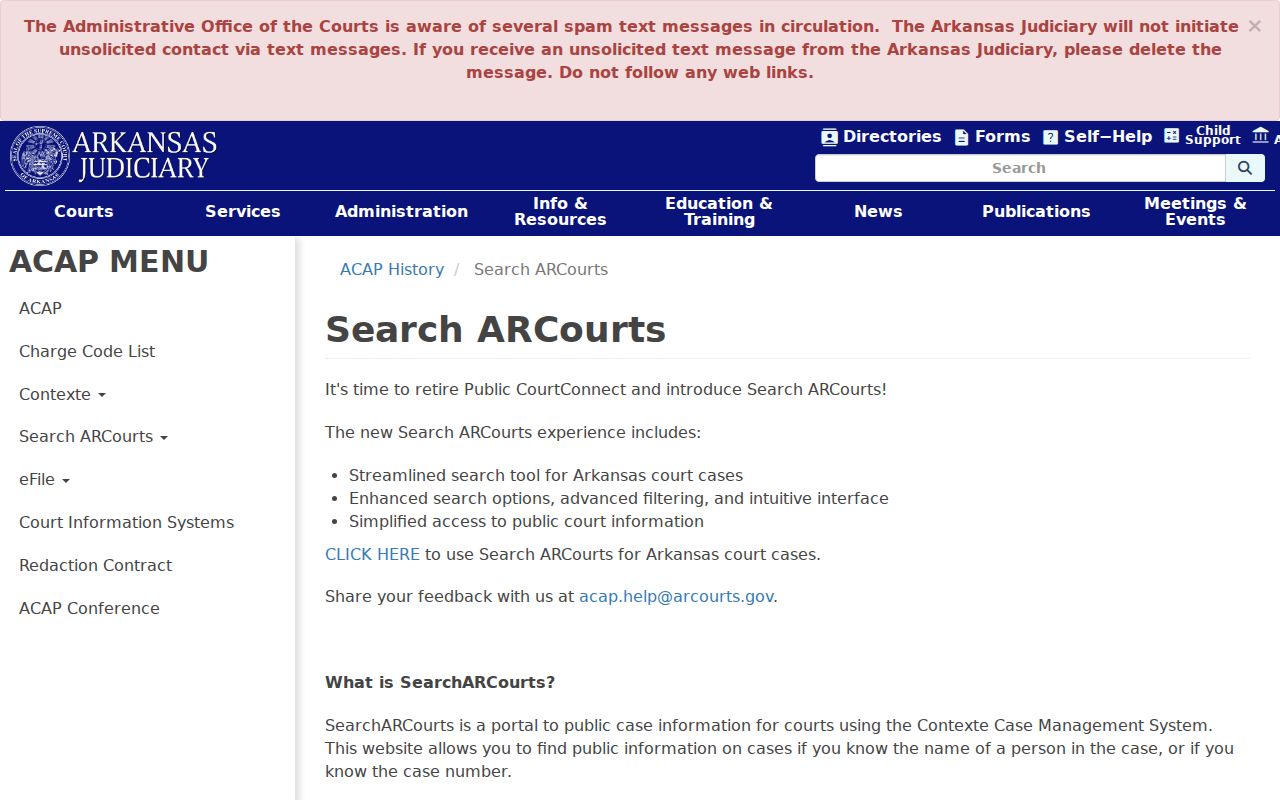
The captured court-search explanation shows why portal results are a starting point rather than a certified Saline County court file.
What the Case File Shows
A Saline County criminal case file links the filed allegation to its judicial outcome. It can show the charging document, court and judge, docket entries, hearing dates, motions, plea, disposition, judgment, and sentence. Read charge and disposition together. A listed charge describes what was alleged or filed; the disposition tells what happened to it.
| Case Number & Court | Identifies the docket and whether Circuit or District Court holds it. |
|---|---|
| Charging Document | States the prosecutor-filed allegation, such as an information. |
| Docket Entries | Chronological filings, orders, notices, and hearings. |
| Hearing Dates | Past proceedings and future court events. |
| Disposition & Judgment | Shows dismissal, plea, acquittal, conviction, or another outcome. |
| Sentence & Conditions | Records punishment and public supervision terms after conviction. |
Saline County Clerk Case Copies
When a docket lacks a pleading or scanned order, ask the Saline County Circuit Clerk. The court department is at 200 N. Main Street, Suite 113, Benton, AR 72015, and its main court line is (501) 303-5615. The clerk keeps proceedings, prepares dockets, and handles the original judicial record.
Use the case number when requesting a copy. State whether an ordinary copy or certified copy is needed. Older paper records, archived material, and questions about a filed sealing order belong at the clerk counter rather than the public portal. For a District Court matter, contact the Benton or Bryant department shown on the docket.
The Administrative Office of the Courts data-request page covers broader court data requests subject to Administrative Order 19.
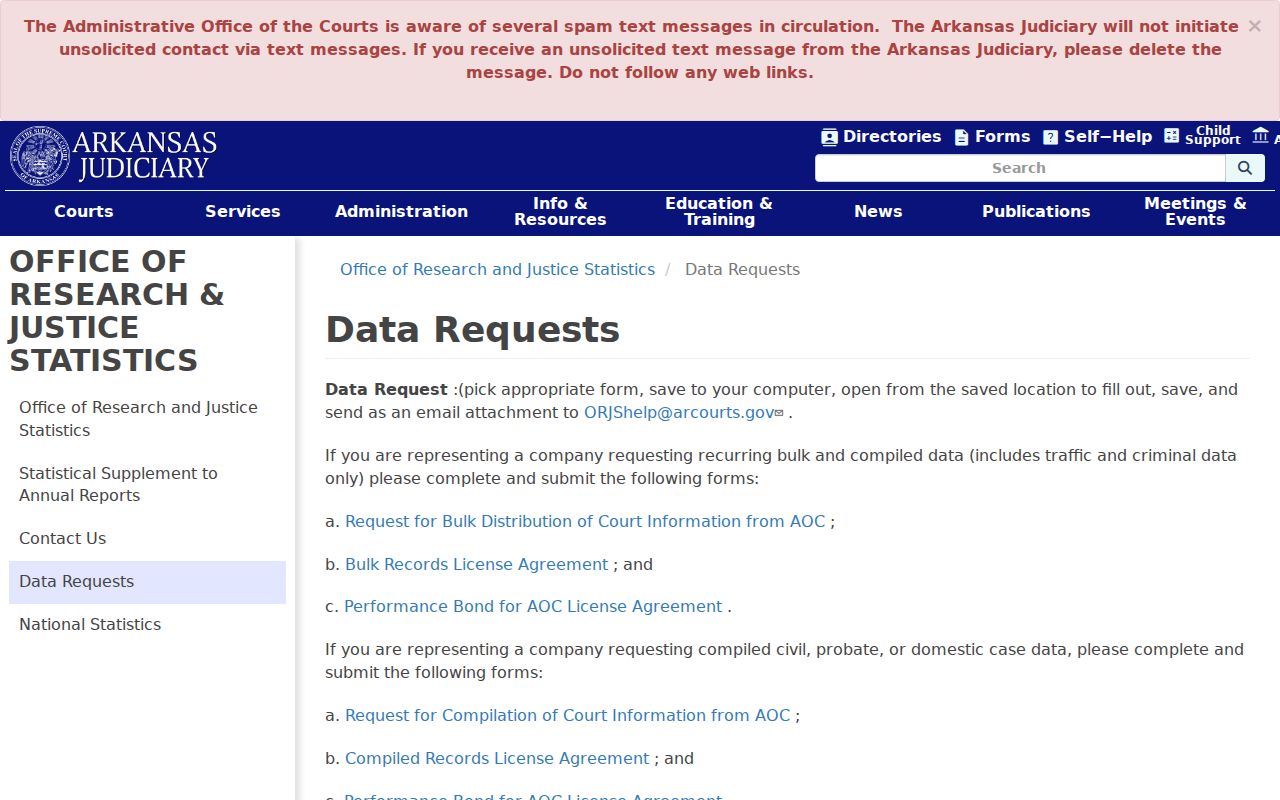
This source distinguishes a statewide data request from a copy request for one Saline County case at the clerk's office.
Stages of a Criminal Case
A Saline County criminal case begins as a court file only after charges are filed. A misdemeanor can remain in District Court. A felony may first appear there for a preliminary matter and then proceed in Circuit Court. Pretrial motions and plea talks can change the charge before a plea or trial resolves it.
Case flow: Charges Filed › Arraignment › Pretrial › Plea or Trial › Disposition › Sentencing
A future event means the case is still moving, not that a conviction has occurred. Read the latest docket entry and judgment status before drawing a conclusion.
Saline County Felony First Stops
District Court can be the first court stop for a felony even though Circuit Court is the felony trial court. This often trips up a name search. A reader may find a preliminary event in a district docket, then need the later circuit case number to see the filed charge and final outcome.
The official Bryant Department page identifies the Saline County District Court office at 208 S.W. Third Street, Bryant, AR 72022, with a main line of (501) 943-0440.
The Bryant court source helps route district-level case questions that a countywide portal result does not settle.
Access and Restrictions
Arkansas Supreme Court Administrative Order 19 governs public court-record access. Saline County criminal court records are public unless a statute, rule, sealing order, or other court order restricts them. Social Security numbers, protected victim data, juvenile information, sealed material, and other protected fields do not belong in the public Internet view.
The Arkansas Freedom of Information Act does not override court-specific confidentiality rules. If a known case is absent, ask the clerk whether it is held in another court, not available online, archived, or restricted. Staff may explain access status without disclosing protected facts.
The original Search ARCourts endpoint remains an official public route alongside the newer search address.
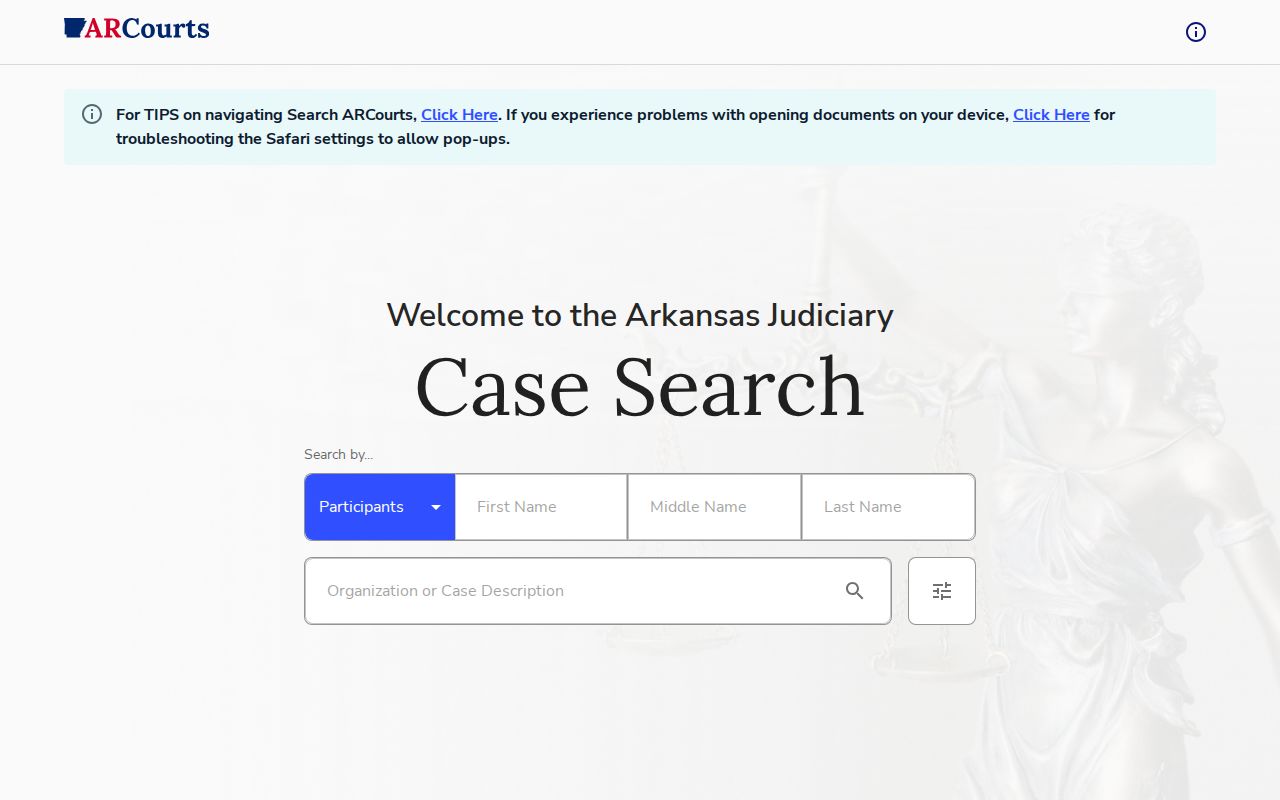
The portal view reflects public data only and cannot replace a certified clerk copy.
Saline County Charges and Dispositions
A charge is the alleged offense. A disposition is the result for that charge. Saline County criminal court cases can end in dismissal, a prosecutor's decision not to proceed, acquittal, plea, or conviction. Amended charges may differ from the allegation shown early in the docket.
- Disposition
- The outcome recorded for a charge or case.
- Nolle prosequi
- The prosecutor's decision not to proceed on a charge.
- Arraignment
- The appearance where charges and a plea are addressed.
- Judgment
- The court's formal result, including conviction and sentence when applicable.
The new public portal displays charge and disposition fields when they are publicly available.
Keeping those fields separate prevents an allegation from being mistaken for the court's final decision.